
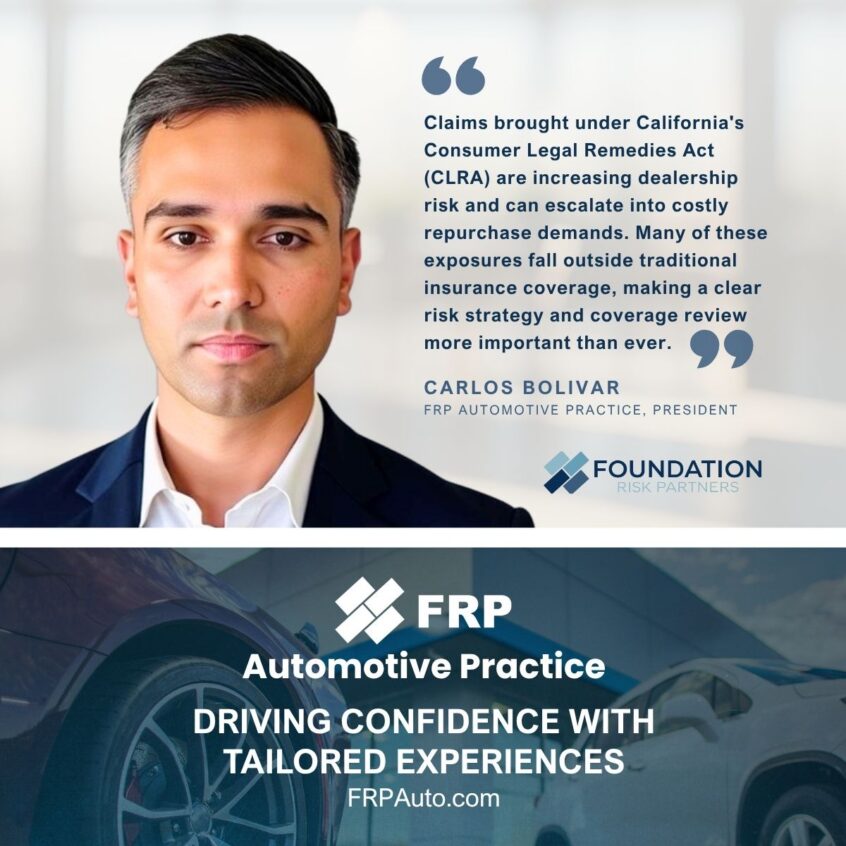
CLRA Claims Continue to Rise Against Auto Dealers and Insurance Coverage Often Falls Short by Carlos Bolivar
California’s Consumer Legal Remedies Act (CLRA) continues to create significant compliance, operational and financial challenges for auto dealerships. As consumer protection litigation and regulatory scrutiny increase, dealerships face growing exposure related to advertising practices, vehicle disclosures, financing transactions and sales documentation.
Because the CLRA allows consumers to seek monetary damages, restitution, injunctive relief and attorneys’ fees, even relatively minor disputes can become expensive and time-consuming for dealerships to resolve. Issues involving advertising, vehicle history disclosures, documentation accuracy or sales representations can result in significant legal expenses, operational disruption and reputational risk.
How CLRA Claims Escalate, Even When Issues Are Minor
Before filing suit, consumers must send a mandatory 30-day demand letter giving the dealership an opportunity to correct alleged violations. Even minor claims can quickly escalate if the demand letter is overlooked and/or the response is incomplete or procedurally improper. Industry guidance consistently emphasizes the importance of documented response procedures, legal review and timely corrective action when consumer complaints arise. A well-managed response process can help limit financial exposure and prevent disputes from escalating. When appropriately addressed through a reasonable correction offer within the statutory safe harbor period, dealerships may be able to significantly reduce or eliminate potential damages and attorney-fee exposure.
The Hidden Exposure: Forced Vehicle Repurchases
A critical and often overlooked consequence of CLRA disputes is that dealerships may be compelled to repurchase a vehicle, effectively rescinding the sale. This may require dealers to:
- Return the customer’s down payment
- Refund monthly payments
- Pay off the outstanding loan balance
- Take back a depreciated vehicle
- Absorb additional losses through wholesale disposition
These repurchase-driven losses can create substantial financial exposure for dealerships. Because restitution, contract rescission and vehicle buybacks are often treated differently from traditional liability damages, coverage may be limited or excluded under some insurance programs. Dealers should carefully review policy language and coverage enhancements with their insurance advisor.
Insurance Coverage for CLRA Claims Is Often Limited
While dealerships commonly carry garage liability, Errors & Omissions (E&O) and other commercial insurance policies, coverage for consumer protection claims can vary significantly by carrier and policy form. Understanding potential exclusions and coverage limitations is an important part of a dealership’s overall risk management strategy.
- CLRA Allegations Are Often Considered Intentional Acts Claims involving misrepresentation, misleading advertising or failure to disclose are frequently subject to exclusions that may limit or restrict indemnity coverage.
- Restitution and Contractual Obligations May Not Be Covered Repurchases, refunds and contract rescissions are often treated differently from covered damages and may fall outside a policy’s insuring agreement.
- Attorney Fee Exposure Can Significantly Increase Claim Costs Fee-shifting provisions can substantially increase the cost of resolving disputes. Even when underlying damages are limited, legal fees, settlements and claim-related expenses may create meaningful financial exposure for dealerships.
The bottom line is a dealer may successfully resolve the underlying dispute and still incur substantial uninsured costs.
The good news is some carriers offer broader coverage. Although many policies provide primarily defense-cost protection for consumer protection claims, some insurers offer specialized endorsements designed to broaden available coverage.
Broader Coverage Endorsements May Include:
- Truth in Lending Act (TILA) endorsements
- Expanded Errors & Omissions (E&O) coverage
- Regulatory and consumer protection coverage enhancements
In certain situations, these endorsements may provide protection not typically available under standard garage or general liability forms. Availability varies by carrier, jurisdiction, dealership operations and underwriting requirements.
California May Be Leading a Broader Trend
While California’s Consumer Legal Remedies Act (CLRA) creates one of the most challenging legal environments for auto dealers, consumer protection litigation is growing well beyond the West Coast. States across the country are increasingly using consumer fraud, deceptive trade practice and vehicle disclosure laws to challenge advertising, financing practices, sales representations and dealership disclosures.
What makes California unique is its combination of broad consumer protections, attorney-fee recovery and powerful rescission remedies, which can make even relatively small disputes costly to defend. However, the broader focus on consumer transparency, disclosure requirements and fee-shifting statutes suggests that dealership litigation risks may continue to expand nationwide. Rather than viewing California as an outlier, dealers may be better served by seeing it as a leading indicator of how consumer protection exposures are evolving across the industry.
Final Takeaway
Consumer protection claims continue to place greater emphasis on dealership compliance, transparency and operational controls. Beyond legal defense costs, disputes can create substantial financial exposure through vehicle repurchases, attorney fees, business disruption and reputational risk.
As consumer expectations, regulatory oversight and litigation activity continue to evolve, dealerships should take a proactive approach to compliance, employee training and insurance program design. Strong documentation practices, effective complaint response procedures and a clear understanding of potential coverage gaps remain essential components of a comprehensive risk management strategy.
The point is, dealerships facing CLRA claims may be exposed to more than legal defense costs. Vehicle repurchases, attorney fees and other financial liabilities can create significant risk, particularly when traditional insurance coverage may not fully respond. FRP’s Automotive Practice works with dealerships nationwide to identify emerging risks, evaluate insurance program effectiveness and develop strategies that support long-term operational and financial stability. By combining industry expertise, risk management insight and specialized coverage solutions, FRP helps dealerships navigate complex consumer protection exposures and make more informed business decisions in an evolving regulatory environment.